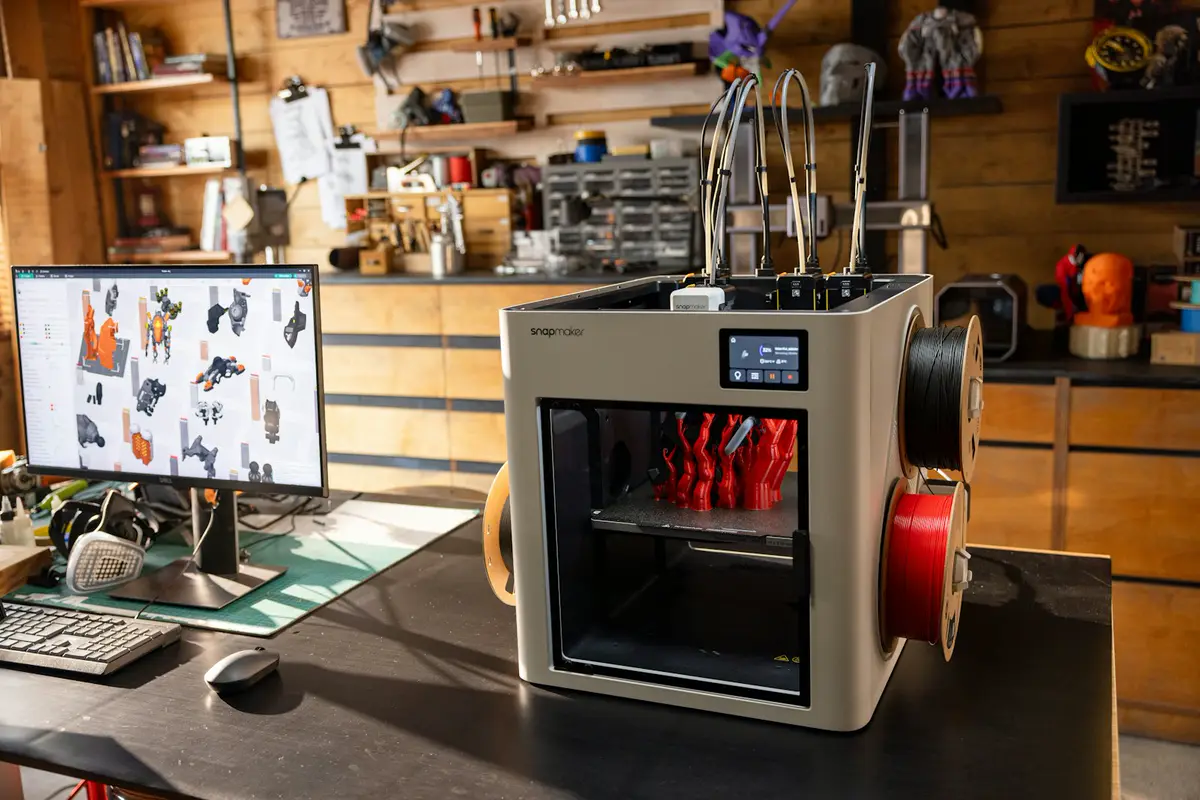
How to measure a replacement part
Calipers, photos, one known dimension, and a cheap test fit before you print the part you will keep.
November 10, 2026 · Photo: Snapmaker 3D Printer / Unsplash
What to measure with
A tape measure is enough for a shelf. It is a poor tool for a clip, a hinge hole, or a cup that has to drop into a molded pocket. Digital calipers are the useful instrument: outside jaws for a width, inside jaws for a hole, and the depth rod for how far a boss sticks out. Measure the broken part if you still have it, and the hole it came out of. Those two numbers are often not the same.
Write the units down. Most of these files are modeled in millimeters. If you think in inches, convert once and label the sketch, so you do not mix 1/4 inch with 6 mm later. Measure twice, on a clean edge, not on a blob of old sealant.
Photos and one known dimension
A photo with no scale is a picture, not a drawing. Put the calipers or a ruler in the frame, square to the camera, and shoot the front, the side, and the mating face. Note which way is up. A water inlet funnel and a fridge rail only work if the lip and the hole match the thing they touch. The listing title is not a measurement of your rig.
If the maker published a reference size, use it as a check, not as your only number. The Ducato cup holder listed as 75 mm is a good example: confirm that diameter in your own console before you print a stack. Hole spacing on a hinge or a latch matters more than the overall length. Get those centers, and the diameter of the screw that has to pass through.
Test fits and tolerance
Printers do not hit the modeled size exactly. Holes tend to come out small. Pins tend to come out large. A first print in PLA, at the same layer height and nozzle you will use for the real part, tells you which way your machine errs. If a pin is tight, open the hole in the model a little, or turn the fit down, and print again. Do not sand a stack of keepers hoping they all come out the same.
Fit the test piece on the vehicle, not only on the bench. A door holder can look right in your hand and bind on the frame. When the PLA fit is right, reprint in the material that belongs there. That choice is covered in PLA, PETG, and ASA. More of the parts people actually measure are under latches and appliance and plumbing.